
Cultivating Resilience: Burundi’s bold strategy to reclaim soils & secure food for the future
BUJUMBURA, BURUNDI: Across the rolling high-altitude hills of Burundi, the promise of rich, diverse ecosystems is increasingly undercut by urgent environmental pressures. High population growth, intense land fragmentation, severe soil erosion, and climate variability have pushed smallholder farmers to the edge, making basic inputs increasingly expensive and supply chains dangerously fragile.
Against this backdrop, agricultural experts, policymakers, researchers, and civil society leaders gathered in Bujumbura from September 14–18, 2026, for a landmark validation workshop. Their shared mission was to review, refine, and validate the draft Burundi National Agroecology Strategy and Implementation Plan, a long-term blueprint designed to transform the nation’s agrifood systems through to 2037.
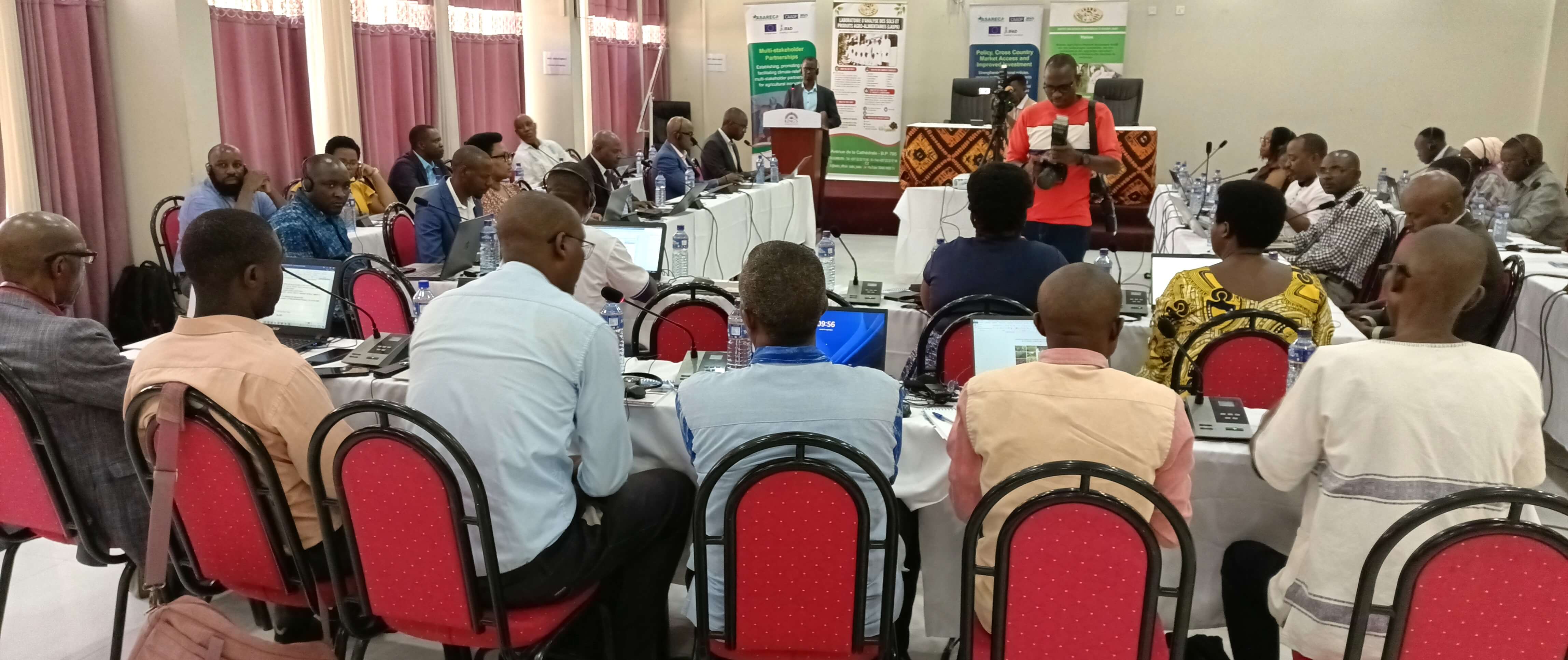
Convened & facilitated by ASARECA through EU Funding
Convened by ASARECA in collaboration with Burundi’s Ministry of Environment, Agriculture, and Livestock, and the national research apex body, Institut des Sciences Agronomiques du Burundi (ISABU), the event signals a decisive shift toward eco-friendly, resilient farming.
Supported by the European Union-funded CAADP-XP4 project and managed by the International Fund for Agricultural Development (IFAD), the strategy aims to transition agroecology from a collection of sustainable techniques into a core national driver of economic development.
Burundi’s potential, threats, and strategic vision
Delivering the official opening address on behalf of the Minister of Environment, Agriculture, and Livestock, Mr. Butoyi Leonard, the Assistant to the Minister, presented a comprehensive diagnosis of Burundi’s agricultural sector, outlining a national vision designed to establish productive, resilient, and inclusive agrifood systems, contrasting the country’s inherent potential with its structural bottlenecks.
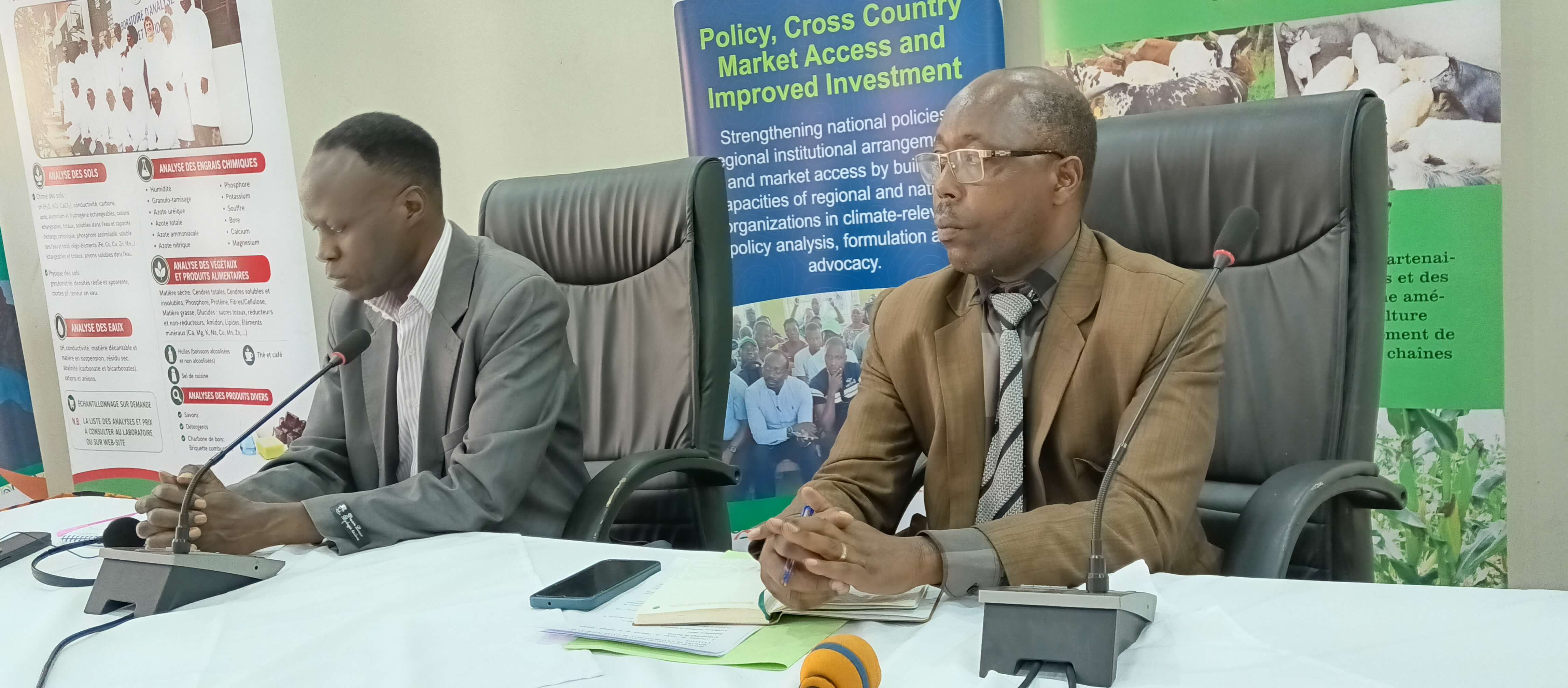
Endowments amid structural pressures
Mr. Butoyi described Burundi’s diverse agroecological zones, fertile soils, and favourable rainfall patterns. He, however, noted that these natural advantages are increasingly undermined by extreme land fragmentation, rapid population growth, declining soil fertility, severe erosion, and loss of biodiversity.
Beyond environmental degradation, smallholder farmers face steep barriers in accessing quality inputs, agricultural extension services, processing facilities, formal credit, and profitable markets. These frictions directly hinder household self-sufficiency and rural nutrition.
Re-defining Agroecology
Mr. Butoyi urged delegates to view agroecology not as a niche alternative or mere field technique, but as a strategic driver of systemic economic transformation. “Field practices like agroforestry, intercropping, crop rotation, composting, soil/water conservation, and integrated crop-livestock production must be scaled to restore natural resources while raising productivity,” he noted.
Resource mobilization for inclusive implementation
Emphasizing a non-coercive, farmer-centered approach, Mr. Butoyi called for voluntary adoption and co-creation over top-down mandates. “Executing the plan will demand blended resource mobilization—combining national budget allocations, international climate finance, private investments, and tailored financial mechanisms,” he observed.
Accountability, farmer centric realities
Delivering remarks on behalf of ASARECA Executive Director Dr. Sylvester Dickson Baguma, Mr. Moses Odeke shifted the spotlight from strategic formulation to rigorous operational execution. Mr. Odeke emphasized that drafting policy documents is meaningless if they do not solve the day-to-day challenges of local food actors.
He noted that agricultural systems across Eastern and Central Africa face identical compounding pressures of climatic shocks, land degradation, rising input costs, and disrupted supply chains. Agroecology-mediated pathways offer the most viable holistic solution to restore regional food security.
Priorities to action
Mr. Odeke urged the Burundi stakeholders to ensure all proposed priorities must be translated into measurable, practical, and achievable actions on the ground and challenged participants to conduct a rigorous audit of the draft document by reflecting on eight fundamental questions:
• Does the strategy respond to the everyday needs of Burundian farmers and agri-food actors?
• Are the proposed priority interventions practical and achievable?
• What specific institutional arrangements are required for coordinated implementation?
• What market and policy mechanisms are needed to motivate private stakeholders to invest in agroecological value chains?
• How will marginalized groups, women, and youth be actively included?
• What cross-sector partnerships are needed to turn policy into action?
• Have concrete funding sources (Government, Development Partners, Private Sector) been identified?
• How will progress be monitored, and how will lessons from successes and failures be integrated?
Guiding Governance: Policy and Practical Priorities
Ms. Julian Barungi, ASARECA Programme Officer for Policy, emphasized that establishing a clear policy framework is essential to define institutional roles from grassroots farmers to national ministries. The policy grounds agroecology within national governance structures and provides development partners with a clear, prioritized map for capital investments.
Restoring the hills of Burundi
Agriculture is both a vital lifeline and a sector under profound environmental strain. Supporting over 85% of the national workforce and generating 95% of the domestic food supply, the country’s farming system has reached a critical juncture. Once the National Agroecology Strategy is launched, the Government of Burundi would be moving away from fragmented, short-term agricultural initiatives toward a unified paradigm shift, positioning ecological principles at the core of national economic development.
Transformation and sustainability
Burundi’s smallholder farmers face severe structural challenges. Over 40% of agricultural households cultivate plots under 0.25 hectares, forcing continuous cultivation on steep hillside slopes without adequate fallow periods. Intensive cultivation combined with heavy seasonal rains triggers catastrophic soil erosion, swallowing an estimated 38 million tonnes of fertile soil annually, an economic loss equivalent to roughly 3.9% of national. Compounded by climate variability, erratic rainfall, and declining soil organic matter, traditional farming practices are no longer sufficient to secure food and nutrition security. The country has 85.2% of the working-age population employed in agriculture, 38 million Tonnes of fertile soil lost annually to erosion, with a meagre land holding 0.25 hectares average farm size for more than 40% of rural households.
Scope of the strategy
Rather than creating a parallel or competing policy framework, the strategy acts as a convergence platform that unifies existing commitments including Vision Burundi 2040–2060, the Revised National Development Plan (PND 2023–2027), the Nationally Determined Contribution (NDC 3.0), and the National Seed Plan, built around six strategic pillars aligned with FAO’s 10 Elements of Agroecology, the strategy encompasses a comprehensive scope focusing on:
• Integrated Soil Fertility Management (ISFM), contour farming, anti-erosion vegetative hedges, agroforestry, and watershed restoration to halt soil loss and enhance soil moisture retention.
• Crop diversification, intercropping with nitrogen-fixing legumes, crop rotation, Integrated Pest Management (IPM), and climate-adapted local seed systems.
• Post-harvest losses through solar drying, improved storage, small-scale processing, collective producer marketing, and agroecological product labeling/guarantee systems.
• Farmer Field Schools (FFS), digital agricultural advisory tools, practice mapping.
• Equitable resource access for women, fosters youth-led green enterprises (nurseries, biological input production), and promotes nutrient-rich local food gardens.
• Establishing multi-stakeholder governance from national ministries down to provincial and communal levels while mobilizing blended and climate financing.
Redefining Burundi’s
The adoption of the Strategy redefines Burundi’s agricultural model across four crucial dimensions:
• Restoration as productive capital: Rebuilding soil fertility, organic matter, and tree cover is no longer viewed as an external conservation project; it is treated as a foundational economic investment required to sustain crop yields.
• Circularity over external input dependency: Instead of relying solely on expensive, imported synthetic inputs, the new paradigm emphasizes nutrient recycling, compost utilization, biofertilizers, and biological pest controls.
• Farmer co-creation over top-down advice: The strategy pairs local indigenous farming knowledge with scientific research through participatory platforms, ensuring practices are tailored to specific hill microclimates.
• Decentralized territorial governance: Implementation is embedded directly across Burundi’s 5 provinces and 42 communes, ensuring local communities and cooperatives lead implementation on the ground.
Looking Forward
As the Bujumbura validation workshop concludes, stakeholders are finalizing an operational roadmap for the formal adoption, resource mobilization, and regional rollout of the strategy. Backed by ASARECA’s regional technical support, EU CAADP-XP4 funding, IFAD management, and national leadership from Burundi’s Ministry of Agriculture, the initiative establishes a practical foundation to safeguard the nation’s agricultural future through its long-term strategic horizon. By aligning public policy, fostering active community participation, and directing targeted investments toward its 2035–2037 targets, Burundi offers a model for climate-resilient transformation in East Africa, laying a durable foundation for productive, inclusive, and environmentally sustainable agrifood systems for generations to come.