
ASARECA, NARO and MAAIF Launch Beetle Rearing Facility in Kayunga to Combat Invasive Parthenium Weed under the CAADP-XP4 Programme
GENEVIEVE APIO2026-09-03T16:35:22+00:00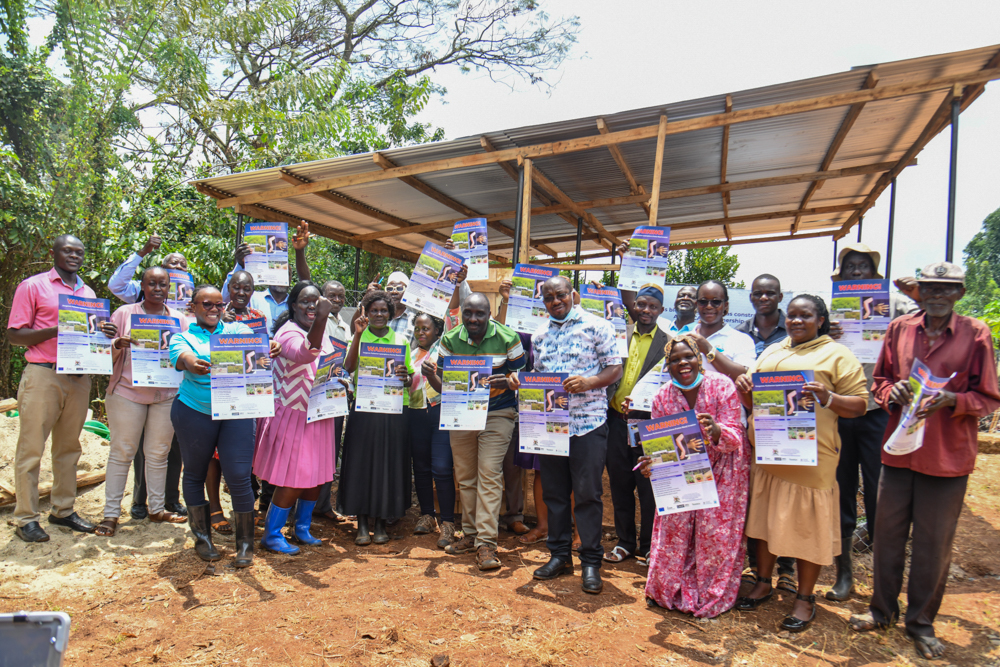
By Genevieve Apio
KAYUNGA, Uganda —The Association for Strengthening Agricultural Research in Eastern and Central Africa, in partnership with the National Agricultural Research Organisation and Ministry of Agriculture, Animal Industry and Fisheries (MAAIF), has launched a Beetle Rearing Facility in Kangulumira, Kayunga District, to strengthen the biological control of the invasive Parthenium hysterophorus weed.
The facility was launched during a two-day activity held on 17–18 August 2026 and will provide a platform for rearing and multiplying beetles used as biological control agents against Parthenium, while creating a practical learning space for farmers, extension personnel and other agricultural stakeholders.
The intervention is implemented under the Comprehensive Africa Agriculture Development Programme ex-Pillar 4 (CAADP-XP4), with financial support from the European Union (EU) administered through the International Fund for Agricultural Development (IFAD).
The launch comes at a time when farmers andagriculturalauthorities in Kayunga are reporting the increasing presence of Parthenium in agricultural fields, gardens, compounds and along roadsides.
Parthenium becoming a growing concern in Kayunga
For Mrs. Ann Bulya, District Agricultural Officer, Kayunga District, Parthenium has become part of a wider challenge posed by pests, diseases and invasive species to agricultural production in the district.
“In Kayunga District, as a farming region, we have quite a number of pests and diseases due to climate change. For the invasive weeds, we are struggling with Parthenium. It is all over the place in farmers’ fields; it can be sighted on roadsides and in gardens, and some people don’t know it and use it for decorative purposes,” Buliya said.
She said the new facility provides an opportunity to intensify awareness about the invasive weed while introducing communities to biological control as a sustainable management option.
“We hope to continue spreading and creating awareness on Parthenium while using the beetle control facility,” she added.
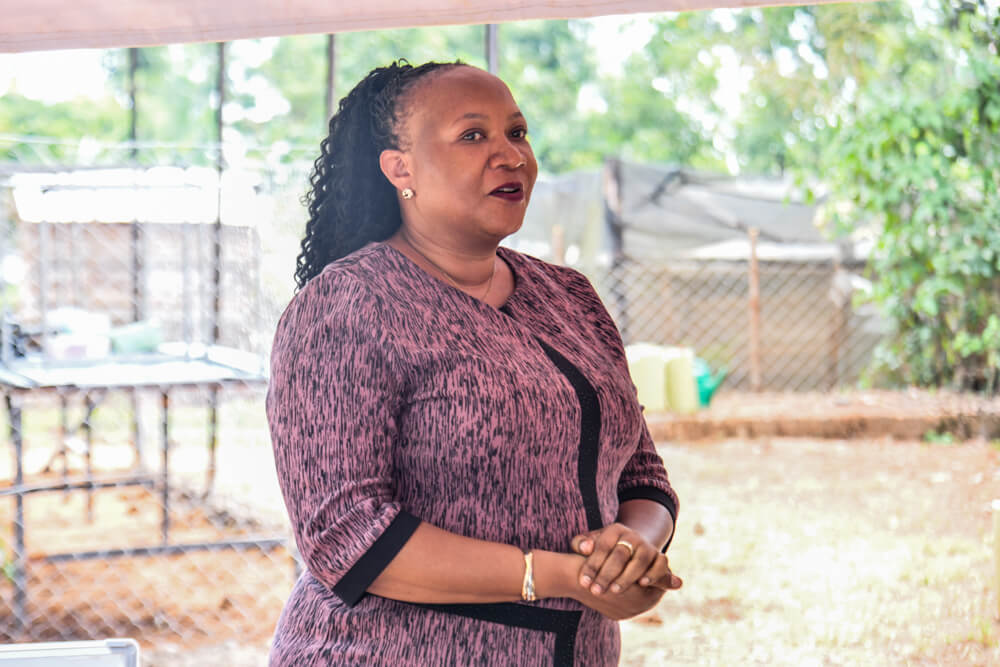
According to Mrs. Bulya, the agricultural losses associated with pests and diseases are already significant.
“The losses that we are experiencing related to pests and diseases range between 30 and 40 percent,” she said.
The challenge extends beyond Parthenium. Although environmentally friendly biological control technologies have been developed and validated by research institutions in Uganda, their adoption among smallholder farmers remains limited. Many farmers continue to rely on synthetic pesticides, sometimes improperly, with implications for human health, the environment, pest resistance and production costs.
The intervention therefore seeks to bridge the gap between technologies developed through agricultural research and their uptake by farming communities.
Uganda’s battle with Parthenium is not new
While the weed is increasingly becoming visible in farmers’ gardens in Kayunga, Uganda’s battle with Parthenium stretches back more than a decade.
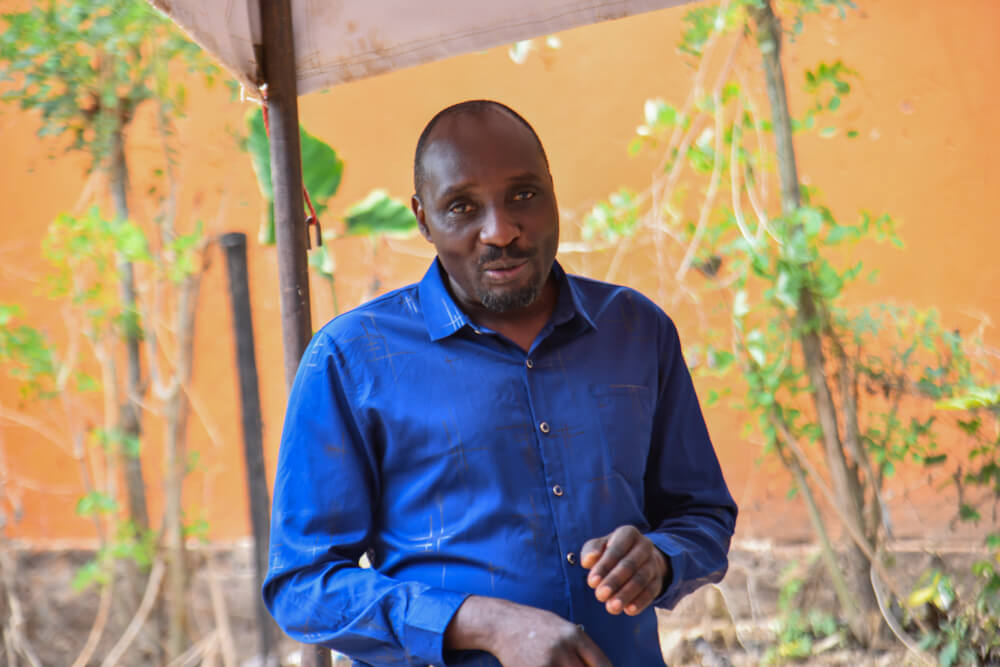
David Kutunga, Principal Agricultural Inspector at MAAIF, said the country experienced an outbreak of Parthenium as far back as 2012, prompting government efforts to sensitise affected communities.
“These are not new weeds. We experienced a Parthenium outbreak in 2012, and the Ministry tried to do all it could through its mandate by sensitising the affected communities in the country,” Kutunga said.
At the time, he explained, the weed was largely associated with rangelands and national parks and was therefore not considered an immediate threat by many farmers.
“The problem was in the rangelands and national parks. Farmers didn’t care until around 2016–2018, when Parthenium spread to compounds and gardens,” he said.
With the weed now spreading into productive agricultural areas, attention has increasingly turned to sustainable management
approaches that can reduce dependence on chemical pesticides.
“We are trying to see how the use of pesticides can be reduced. Working with NARO, they came up with a biological control agent in the form of a beetle that can feed on Parthenium so that the population can be reduced,” Kutunga explained.
Reducing dependence on hazardous synthetic pesticides while increasing awareness and adoption of biological control technologies is among the expected outcomes of the wider intervention.
Farmers tell the story from their fields
Beyond the scientific discussions and institutional response, the extent of the Parthenium challenge becomes clearer in the fields of farmers who are already living with the invasive weed.
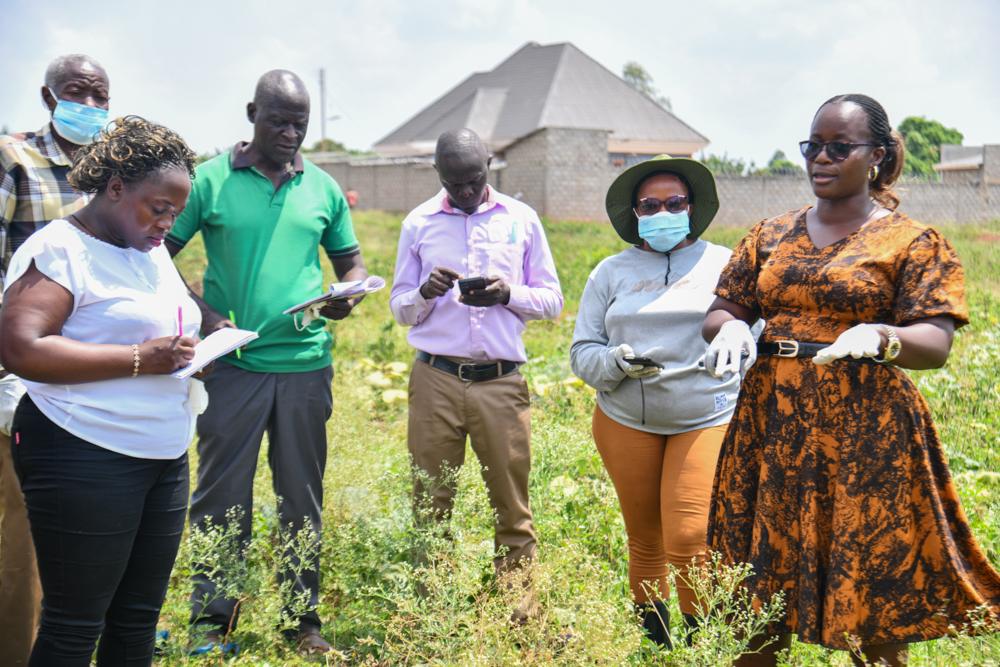
During the two-day activity, participants moved out of the meeting venue and into affected fields, giving farmers an opportunity to show researchers, extension personnel and government officials what they are experiencing.
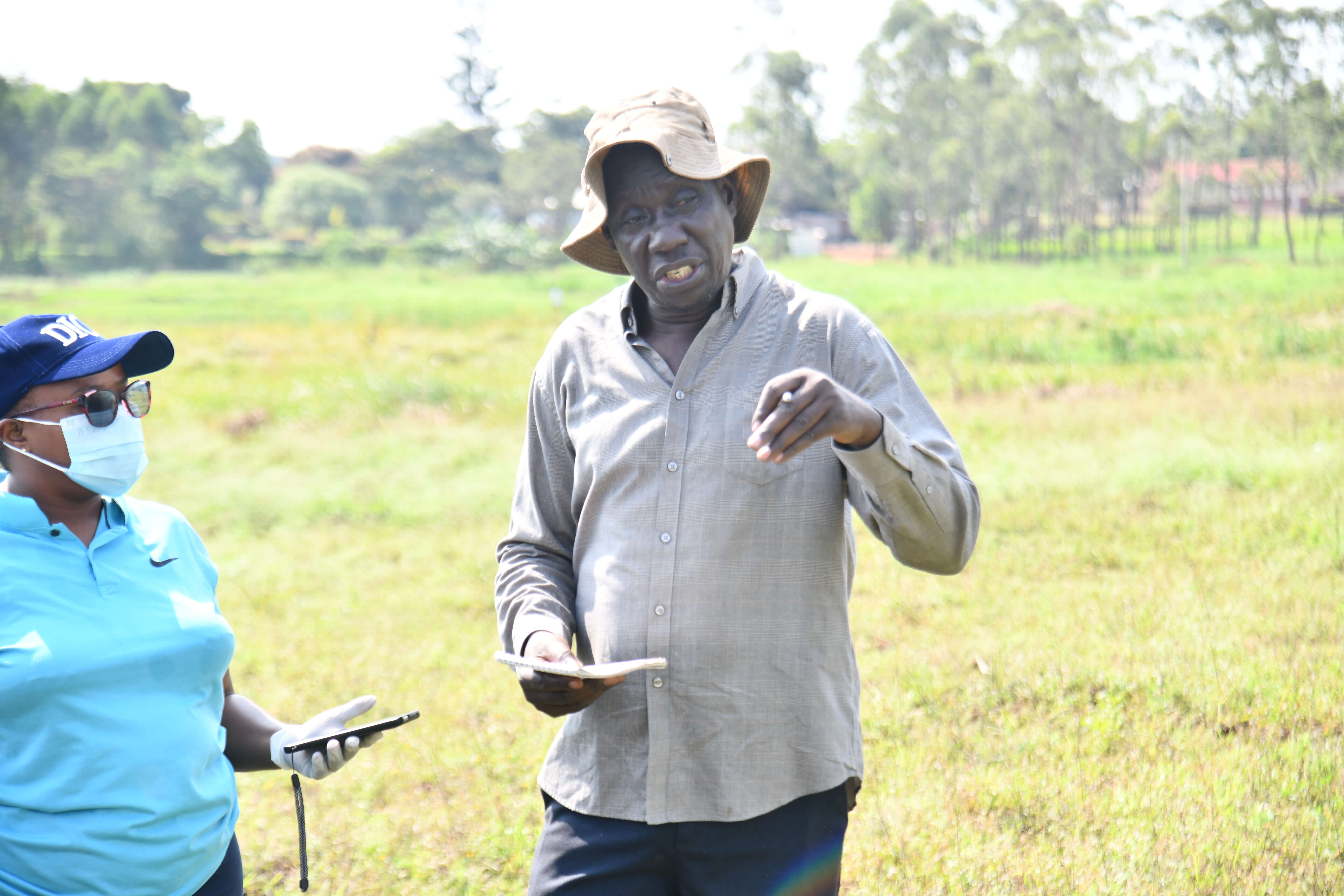
For Robert Lwasa, a farmer in Kayunga District, the impact became particularly evident in his pineapple garden.
“I first planted pineapples and applied fertilizer, but the weed took it all up, and the pineapples came out really small,” Lwasa said.
Another pineapple farmer described the difficulty of controlling the weed once it becomes established.
“When we plant pineapples, we are affected by the Parthenium weed because there is no pesticide that can kill it. Even when you kill it, the weed still comes up,” the farmer said.
For the farmers, Parthenium is no longer simply an invasive weed appearing along roadsides. It is growing alongside crops from which families expect to produce food and earn an income.
Their experiences also explain why the Kayunga activity deliberately combined technical discussions with visits to affected farms.
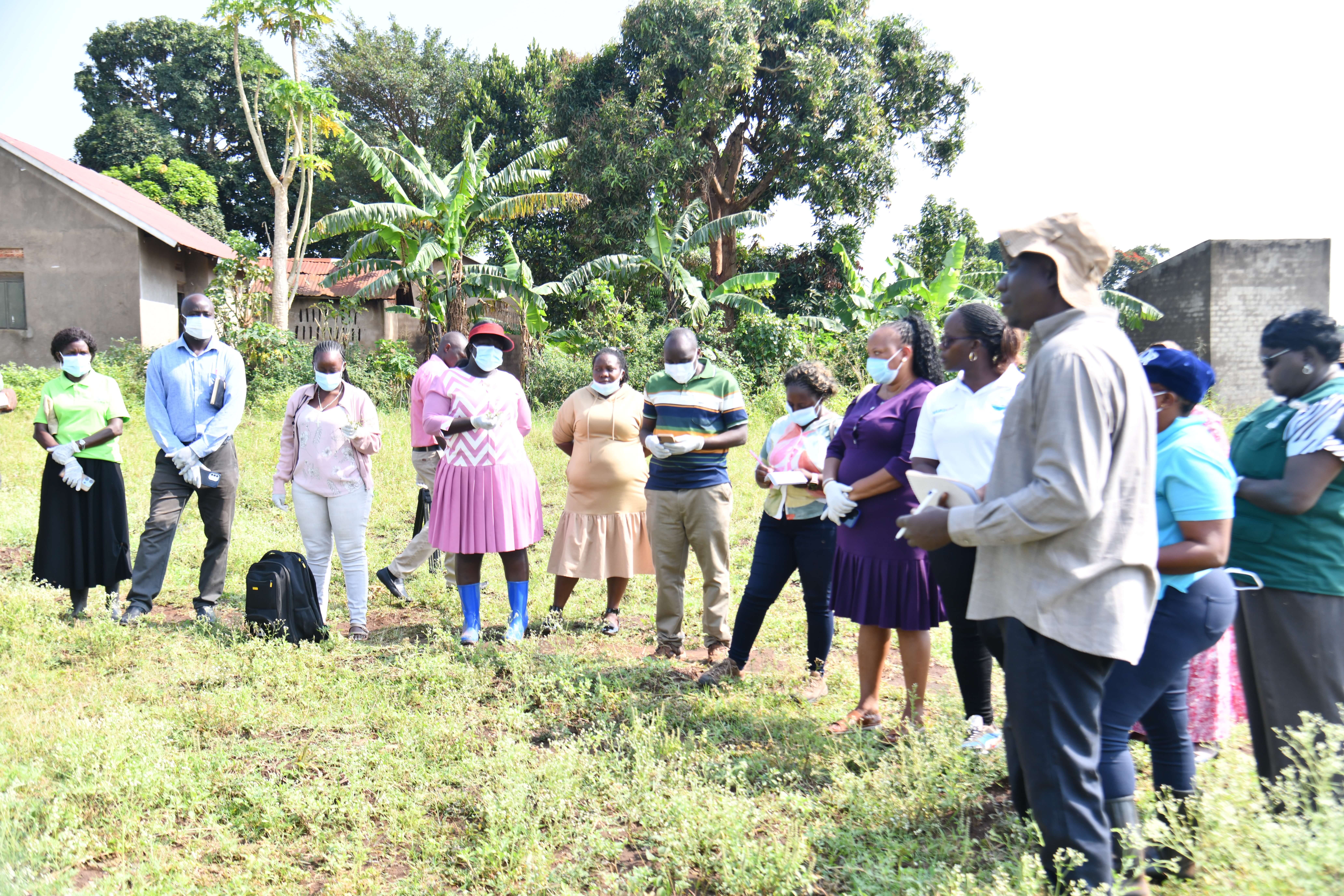
On the first day, participants travelled to a Parthenium-infested field to observe the problem firsthand and listen to farmers’ experiences. The following morning, they visited another affected field in Kayunga Town Council before proceeding to the demonstration facility in Kangulumira.
The movement from the affected fields to the beetle-rearing facility allowed participants to see both sides of the intervention: the challenge in farmers’ gardens and a potential biological solution being developed to address it.
Fighting Parthenium with its natural enemy
At the Kangulumira facility, attention shifted from the invasive weed to the beetles being used as biological control agents against it.
Participants learned how the beetles interact with Parthenium and how biological control can complement other approaches to managing the invasive weed.
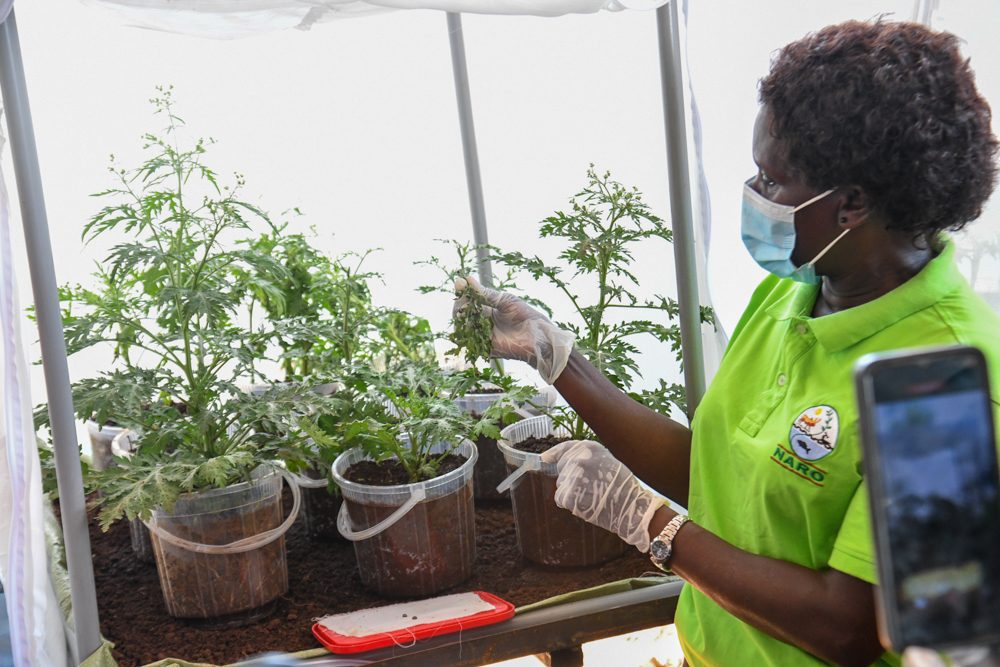
During a practical session facilitated by Stella Aropet Adumo, participants observed and participated in infesting Parthenium plants with beetles, giving farmers and extension personnel hands-on exposure to the technology.
The biological control approach offers an alternative to relying exclusively on chemical control by using a natural enemy of Parthenium to help suppress its population.
Importantly, the Kangulumira facility is designed to be more than a place where beetles are reared. It will also provide a practical learning and demonstration platform where farmers and extension personnel can interact with the technology, understand how it works and transfer that knowledge to farming communities.
Taking Research soultions to the last mile
The intervention reflects ASARECA’s broader role in strengthening connections among agricultural research, extension systems and farming communities so that proven technologies can reach the people who need them.
Mrs. Blaise Amony, Program Officer, Capacity Strengthening at ASARECA, addressed participants during the engagement, which brought together farmers, district officials, researchers and other agricultural stakeholders.
The wider initiative seeks to identify, validate and package proven biological control technologies; establish demonstration sites; strengthen the capacity of farmers, extension workers, community facilitators and agro-input dealers; and enhance collaboration among research institutions, government, private-sector actors and farmer groups.
NARO scientists provided technical expertise on the biological control of Parthenium during the engagement.
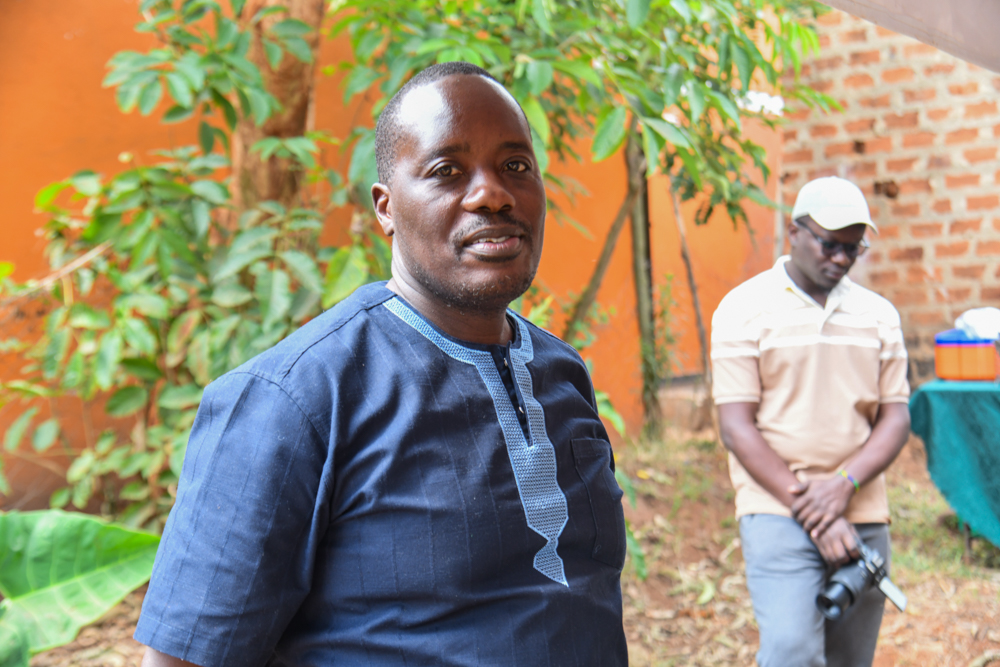
Dr. Henry Wagaba, Head of the Biodiversity and Biotechnology Programme at NARO, and Dr. Katono Kasifa of NARO engaged participants on biological control and the management of Parthenium before the field activities.
Bringing researchers into direct interaction with farmers and extension personnel is critical because successful biological control depends not only on developing technologies but also on ensuring that communities understand, trust and can appropriately use them.
Farmers to champion the technology
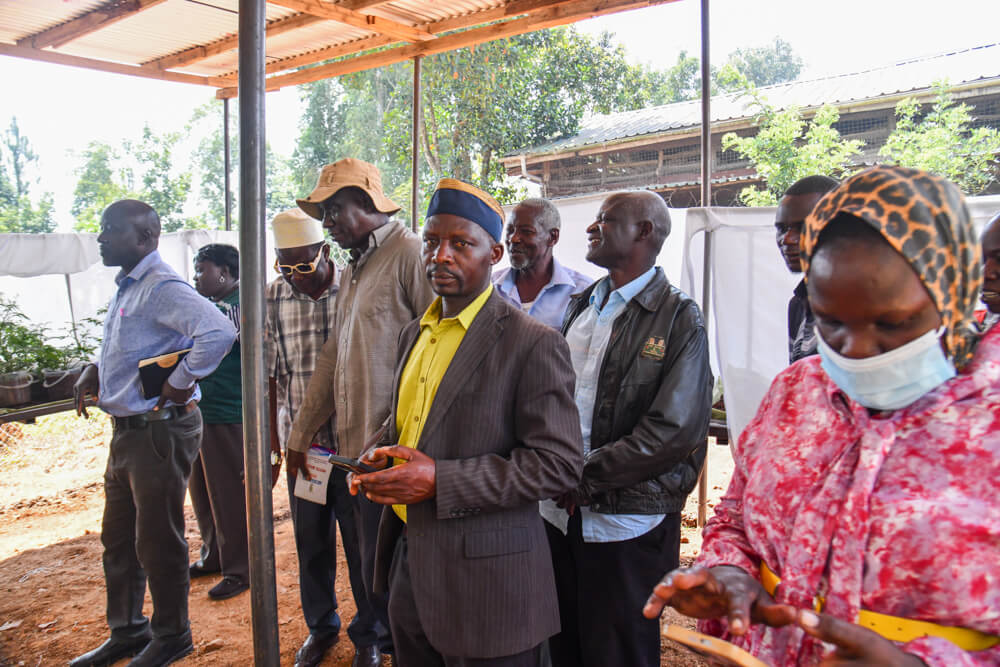
A central feature of the Kayunga intervention is that farmers will not simply be beneficiaries of the facility. They are expected to play an active role in sustaining it and taking the technology into their communities.
Mr. Nsubuga Zacchaeus Mukasa, Senior District Agricultural Officer, Kayunga District Local Government, said community-based facilitators will help manage the facility and champion the innovation among fellow farmers.
“The new facility will be managed by farmers who are the community-based facilitators. They will be the champions taking this innovation to fellow farmers in the community who will take it up,” Mukasa said.
This farmer-led approach is expected to help move knowledge beyond the demonstration facility and into surrounding communities.
Community-based facilitators can provide an important link among researchers, district extension personnel and farmers, helping communities recognise Parthenium and understand the biological control options available for managing it.
The approach is consistent with the intervention’s sustainability strategy, which includes strengthening local production and distribution systems for biocontrol products, integrating biological control approaches into government extension programmes, establishing farmer champions and community learning platforms, and promoting partnerships for scaling.
Partnerships critical to sustainable management
The launch brought together ASARECA, NARO, MAAIF, Kayunga District Local Government, researchers, extension personnel and farmer groups, reflecting the collaborative approach needed to address invasive species sustainably.
District leaders participating in the programme included Milly Nansambe, Kayunga District Secretary for Production; Charles Yiga from the District Production Office; and Ann Bulya from the District Agriculture Office. The programme also featured technical contributions from ASARECA and NARO before participants proceeded to the affected fields.

The intervention directly targets smallholder farmers, agricultural extension officers, community-based facilitators and agro-input dealers and distributors, recognising that scaling agricultural technologies requires knowledge and capacity across different levels of the agricultural system.
The work extends beyond Kayunga. Kayunga, Koboko and Pallisa districts have been prioritised among areas affected by invasive weeds, particularly Parthenium hysterophorus. The initiative seeks to increase farmers’ knowledge and adoption of biological control while strengthening links among research institutions, government extension systems and farming communities.
For Kayunga’s farmers, the true measure of the intervention will ultimately be seen in their fields.
The two-day engagement presented two contrasting but connected scenes.
In one, farmers stood in fields where Parthenium had established itself among the crops on which their livelihoods depend.
In another, farmers, researchers and extension personnel gathered at the Kangulumira facility to watch beetles being introduced onto Parthenium plants.
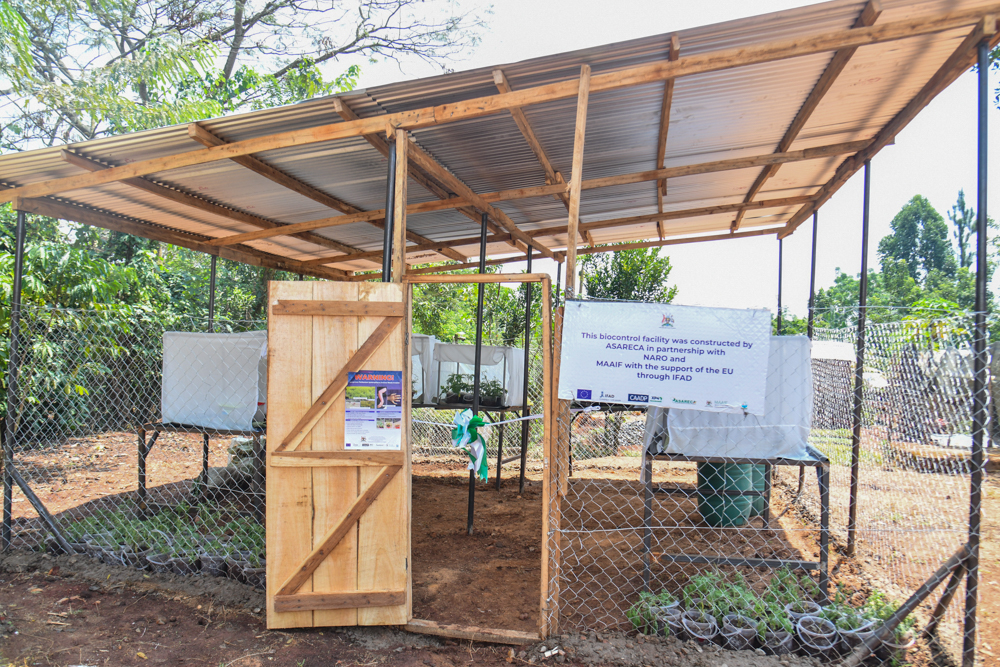
By placing community-based facilitators at the centre of the intervention, ASARECA, NARO, MAAIF and Kayunga District Local Government are seeking to ensure that the knowledge and technology demonstrated in Kangulumira spreads into communities confronting the invasive weed.
For farmers who have struggled to keep Parthenium out of their fields, the beetles may be small. But the possibility they represent is much bigger: a sustainable approach to managing an invasive agricultural threat by working with nature itself.