ASARECA Stregthens Regional Action on Soil Health and Fertilizer Use at IGAD Learning Event
BY GENEVIEVE APIO
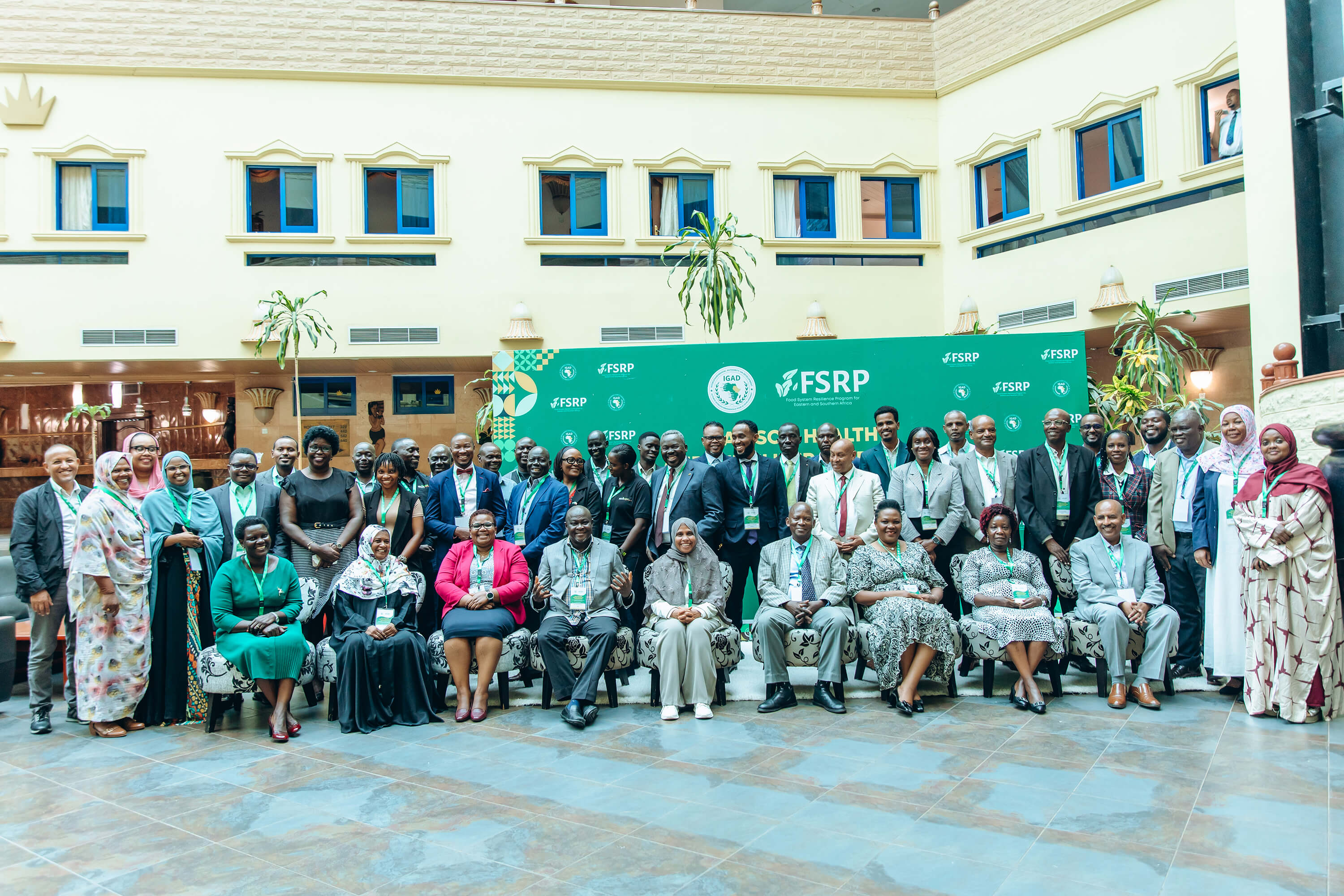
ENTEBBE, Uganda: The Association for Strengthening Agricultural Research in Eastern and Central Africa (ASARECA) joined regional partners, research institutions and representatives from seven IGAD Member States to advance regional action on soil health and sustainable fertilizer use during a four-day learning event held in Entebbe, Uganda.
Held from 14–17 September 2026 under the theme, “Advancing Soil Health and Fertilizer Use for Resilient Food Systems in the IGAD Region,” the IGAD Fertilizer and Soil Health Hub Learning Event brought together representatives from Djibouti, Ethiopia, Kenya, Somalia, South Sudan, Sudan and Uganda, alongside research institutions, technical organisations and development partners.
The event was convened by the Intergovernmental Authority on Development (IGAD) through the Food Systems Resilience Program (FSRP), with support from the World Bank, to strengthen knowledge exchange, partnerships and practical action to address soil degradation, declining soil fertility and inefficient fertilizer use across the region.
ASARECA contributes to regional soil-health agenda
ASARECA participated as a technical partner, contributing its regional agricultural research and knowledge-exchange experience to discussions on soil health, fertilizer use and resilient food systems.
The organisation was also among the technical partners supporting ongoing efforts around IGAD and Uganda soil mapping, alongside the Forum for Agricultural Research in Africa (FARA) and the Centre for Coordination of Agricultural Research and Development for Southern Africa (CCARDESA). IGAD delegation leader Denis Kibuuka acknowledged the contribution of the technical partners to the regional agenda.
ASARECA’s participation reflects its mandate to strengthen collaboration among agricultural research and development institutions in Eastern and Central Africa and to facilitate the generation, sharing and uptake of agricultural knowledge and innovations to address common regional challenges.
The learning event provided an important platform for ASARECA to connect regional agricultural research evidence with policy, investment and practical solutions for improving soil health and agricultural productivity.
Discussions throughout the event focused on Integrated Soil Fertility Management (ISFM), climate-smart agriculture, soil information systems, digital advisory services, fertilizer markets, research and innovation, policy frameworks and evidence-based decision-making.
From knowledge to practical solutions
A key feature of the learning event was the Fertilizer and Soil Health Marketplace, which provided space for participating institutions and partners to showcase technologies, innovations and knowledge products related to soil health, fertilizer management, climate-smart agriculture and sustainable food systems.
ASARECA also exhibited at the marketplace, using the platform to showcase its work in agricultural research, innovation, knowledge management and regional collaboration aimed at strengthening sustainable and climate-resilient agriculture.
The exhibition complemented the technical discussions by giving participants an opportunity to engage directly with practical solutions and explore approaches that can be adapted to different farming and agroecological contexts across the region.
The marketplace reinforced one of the central messages of the event: that scientific knowledge and technologies must move beyond research institutions and reach farmers, extension systems, policymakers and other users who can turn evidence into action. The wider event also highlighted the importance of linking soil information to practical decision-making and investment.
Kawanda brings soil-health research to life
The four-day engagement concluded with a field learning visit to the National Agricultural Research Laboratories (NARL), Kawanda, where participants had an opportunity to see Uganda’s soil-health research and technologies in practice.
The visit allowed the regional delegation to interact with NARO scientists and explore research on soil fertility, nutrient management, soil conservation, climate-smart agriculture and sustainable land management.
Speaking on behalf of Uganda’s Permanent Secretary in the Ministry of Agriculture, Animal Industry and Fisheries (MAAIF), Assistant Commissioner for Food and Nutrition Security Alex Bamboona emphasised the importance of the facility in demonstrating how different areas of agricultural research come together to support productivity.
“Soil health is very important. Kawanda is a perfect example of crosscutting agricultural research.”
The visit included an overview of NARL’s Soils, Environment and Agro-Meteorology Programme, as well as practical demonstrations involving soil conservation gardens, banana and coffee production systems and other soil and ecosystem-management practices.
Participants were also introduced to soil-mapping products, fertilizer recommendations and rates, biochar technology, agricultural waste management approaches and agro-meteorological tools that can help farmers make better decisions.
NARO scientists further demonstrated climate-smart and sustainable land-management practices, including mulching, ZAI pits, water infiltration trenches, grass strips, hedgerows, trash lines and water-infiltration pits.
Regional learning for stronger national action
Leading the delegation, IGAD’s Denis Kibuuka said the Kawanda visit was intended to connect the discussions from the meeting room with practical scientific evidence.
“We want to see the Science. We have been talking Science in the last 3 days and we want to see it now in Kawanda.”
The visit therefore provided an opportunity for participating countries to see how research findings and technologies can be translated into practical approaches for farmers and agricultural systems.
The IGAD Fertilizer and Soil Health Hub has identified six priority areas: policy and advocacy support; capacity strengthening; soil information systems and integrated soil fertility management; research and innovation; markets, trade and supply; and resource mobilisation and partnerships.
For ASARECA, the engagement reinforces the importance of regional cooperation in connecting agricultural research, evidence, innovation and policy to address shared challenges such as declining soil fertility, land degradation, climate variability and low agricultural productivity.
By participating in the learning event, supporting regional knowledge exchange and showcasing agricultural innovations through the exhibition, ASARECA contributed to efforts to strengthen the bridge between research, policy and practical action for healthier soils and more resilient food systems across Eastern and Central Africa.