
Breakthrough: Uganda’s Agricultural research apex body, NARO, launches anti-tick vaccine and production facility
BEN MOSES ILAKUT
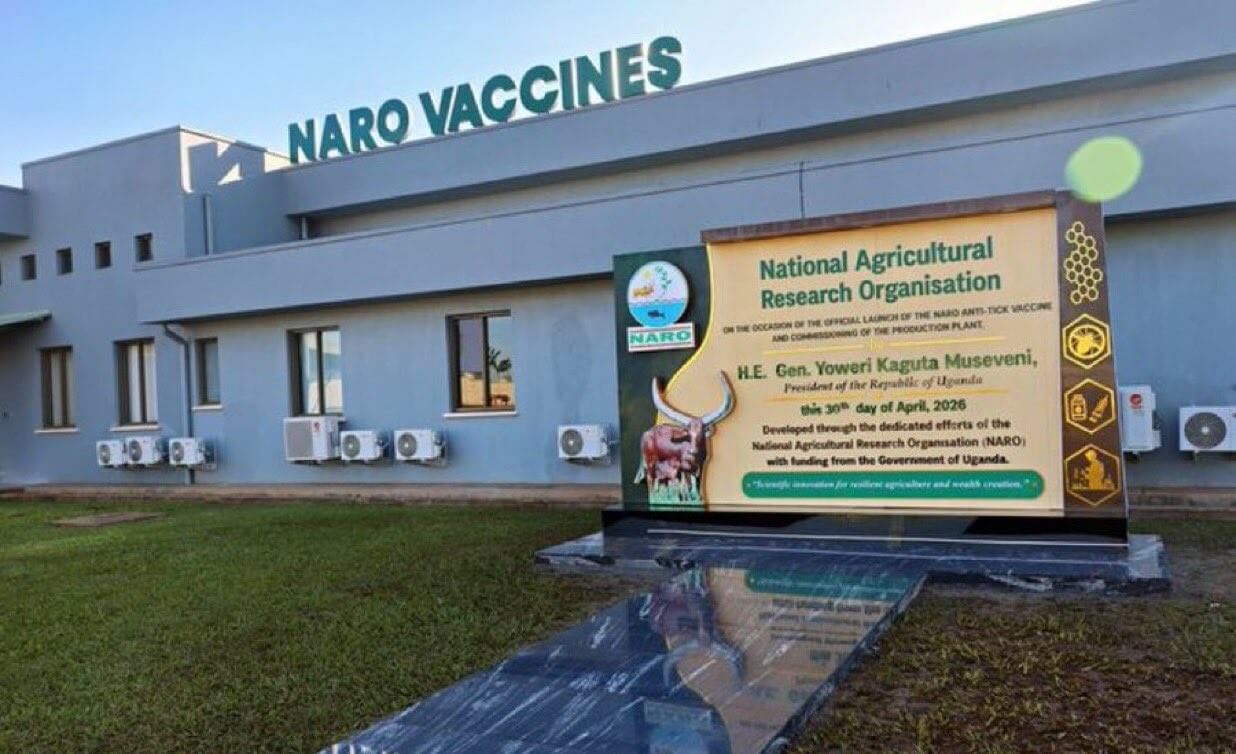
KAMPALA: Uganda’s apex Agricultural Research for Development body, the National Agricultural Research Organization (NARO) on April 30, 2026 launched Uganda’s first locally developed anti-tick vaccine, marking a major milestone in efforts to combat tick-borne diseases affecting livestock in Uganda and the African Continent.

Considered a national scientific breakthrough through, the commissioning of the country’s livestock vaccine alongside a production facility established through a Shs170 billion (about USD 45million) government investment was graced by the Head of State, President Yoweri Kaguta Museveni. During the launch, Uganda’s National Drug Authority, confirmed that the manufacturing plant meets required standards, noting that the authority provided technical oversight throughout the development process.
Speaking at the National Livestock Resources Research Institute (NALIRRI), one of NARO’s research hubs, in Namulonge near Kampala, the visibly excited Ugandan leader, who has over the years extolled the role of science and Innovation in turning around African economies, described ticks as a long-standing challenge in cattle-keeping with farmers incurring losses. “The vaccine offers a safer and more sustainable alternative to acaricides, which have been noted to be toxic and lose effectiveness over time,” Museveni said.

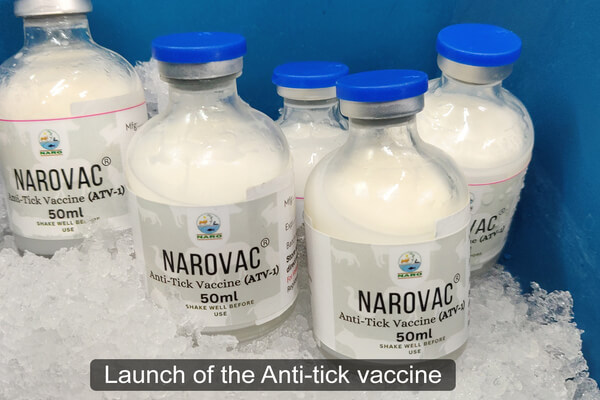
The vaccine, branded NAROVAC-ATV1, is a recombinant product developed from a protein called Subolesin which was extracted from native tick species. It is administered to cattle from one month old, with three initial doses given on day 0, day 30 and day 180, providing protection for up to one year, followed by annual booster doses.
The early research efforts were undertaken by a NARO staff, Kasaija Paul as part of his PhD work under the supervision of Prof. Jose de la Fuente and Dr. Marinela Contreras at the University of Castilla-La Mancha (UCLM), Spain. So far, this collaborative effort has produced two types of vaccines notably the injectable and oral vaccine anti-tick vaccines.
The injectable anti-tick vaccine is administered in the muscle of cattle around the neck region while oral vaccine is given to cattle through the mouth or mixed in a suitable cattle meal. The injectable anti-tick vaccine has been evaluated on 5 farms across the country representing five ecological zones of Uganda.
Vaccines are the most sustainable, effective and environmentally sound alternative for tick control. Vaccines evolved from classically inactivated pathogens such as smallpox and rabies. Anti-tick vaccines are designed to induce a protective response in vaccinated animal hosts such as cattle. When ticks suck blood from vaccinated cattle their body functions are impaired leading death of many ticks, hence resulting reduced tick populations over time.
Based on this scientific explanation, President Museveni pronounced: “The cow now kills the tick,” highlighting the innovation behind the vaccine.

The President also reiterated his commitment to strengthening Uganda’s science sector, proposing tax incentives for scientists. He further pledged continued government support and confirmed plans to provide Shs 600 billion (about USD 166 million) requested by the National Agricultural Research Organization to establish a vaccine research hub.
The Minister of Agriculture, Animal Industry and Fisheries, Frank Tumwebaze, said the project dates back to 2022 when scientists first presented their proposal, and commended government support that led to its successful development.
State Minister for Animal Industry Bright Rwamirama noted that sustained investment in livestock has contributed to growth in dairy farming and an increase in livestock numbers.
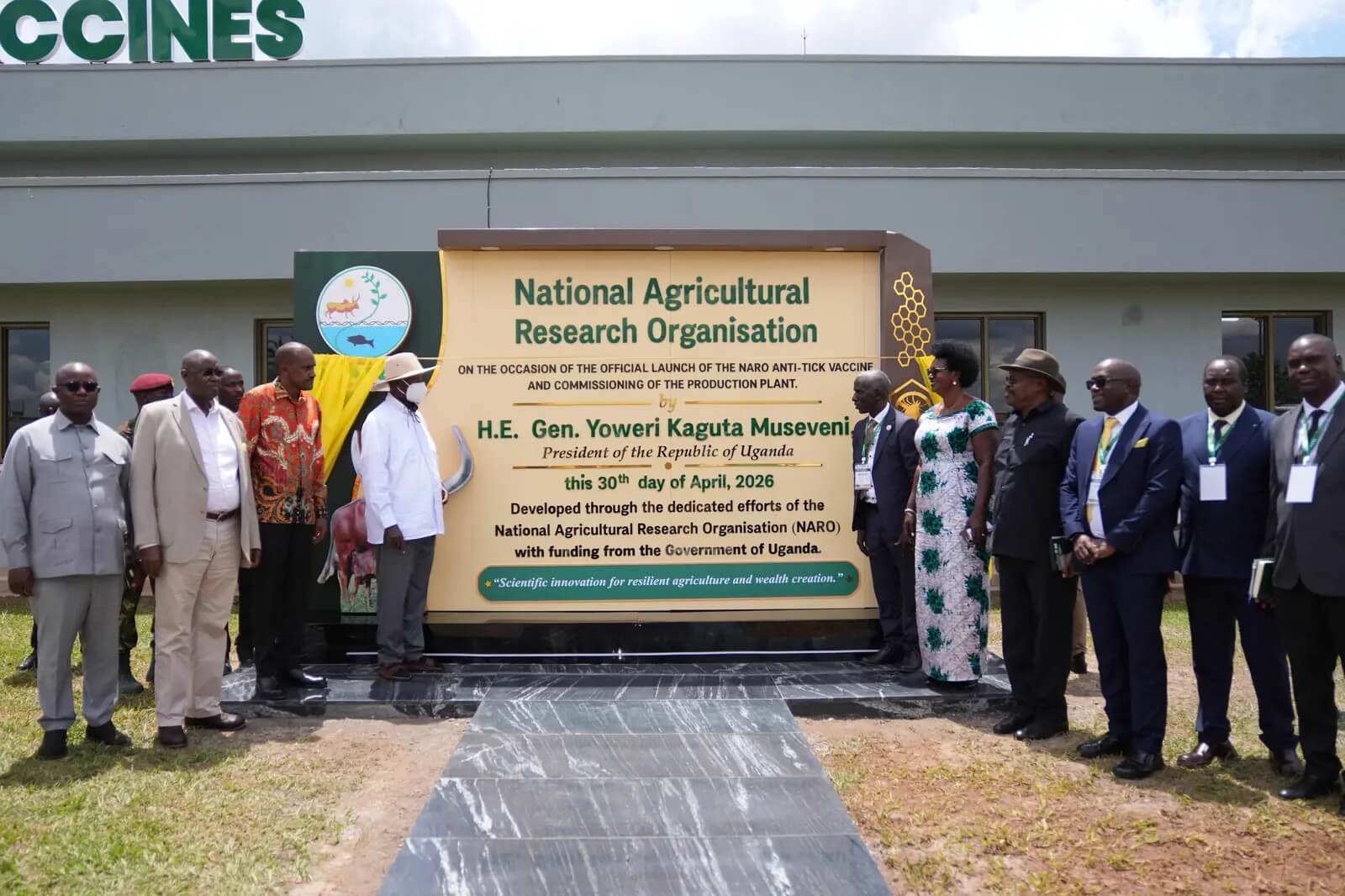
The Director General of NARO, Yonah Baguma, described the launch as both a scientific and economic breakthrough. He said the vaccine is expected to protect Uganda’s estimated 16 million cattle while reducing reliance on imported vaccines and acaricides.
According to Dr. Baguma, the facility has the capacity to produce up to 36 million doses annually, with current output standing at about 3 million doses per month. So far, 1.5 million doses have been produced, with demand already emerging from neighbouring countries. Officials said this could be the largest anti-tick vaccine production facility in Africa, with a potential to meet both local and regional demand.
“This project has created hundreds of jobs and positions Uganda as a potential regional hub for veterinary vaccine production,” said Dr. Baguma.
Farmers involved in early trials have reported positive results, including reduced tick infestations and lower treatment costs. The vaccine is expected to retail at about Shs10,000 (about USD 2.7), making it accessible to many livestock farmers.

During the last 10 years, this collaboration has resulted in the development of vaccines specifically targeting ticks that infest cattle in Uganda (brown ear tick (Rhipicephalus appendiculatus) locally known as Engoha, African blue tick (Rhipicephalus decoloratus), locally known as entujo and tropical bont tick (Amblyomma variegatum) locally known as Embarabara.
For more than a century, the control of ticks and tick-bone diseases depended mainly on the use of chemical acaricides starting with arsenicals. The use of acaricide chemicals has been favoured by their quick knockdown effect. However, use of chemical acaricides is associated with the progressive development of global acaricide resistant tick populations which was first reported in 1937; environmental contamination; and destruction of non-target organisms notably bees and wild birds. In addition, the development and deployment of new acaricides has become more costly and yet new acaricides are associated with faster development of resistant tick populations. Promoting strategic innovations which are environmentally sound such as the Anti-tick vaccines to control multi-species tick infestations are highly justified.
The first anti-tick vaccines registered (TickGARD in Australia and Gavac in Cuba) were designed for the control of tick species that occur in those countries.
Anti-tick vaccines are also cheaper and more sustainable than acaricides. The best approach is to begin combining vaccination with a rational and not abusive acaricide application. As vaccination proceeds over time and animals are more protected. This practice translates into a decrease in tick infestations and the incidence of tick-borne diseases together with the reduction in the use of acaricides.